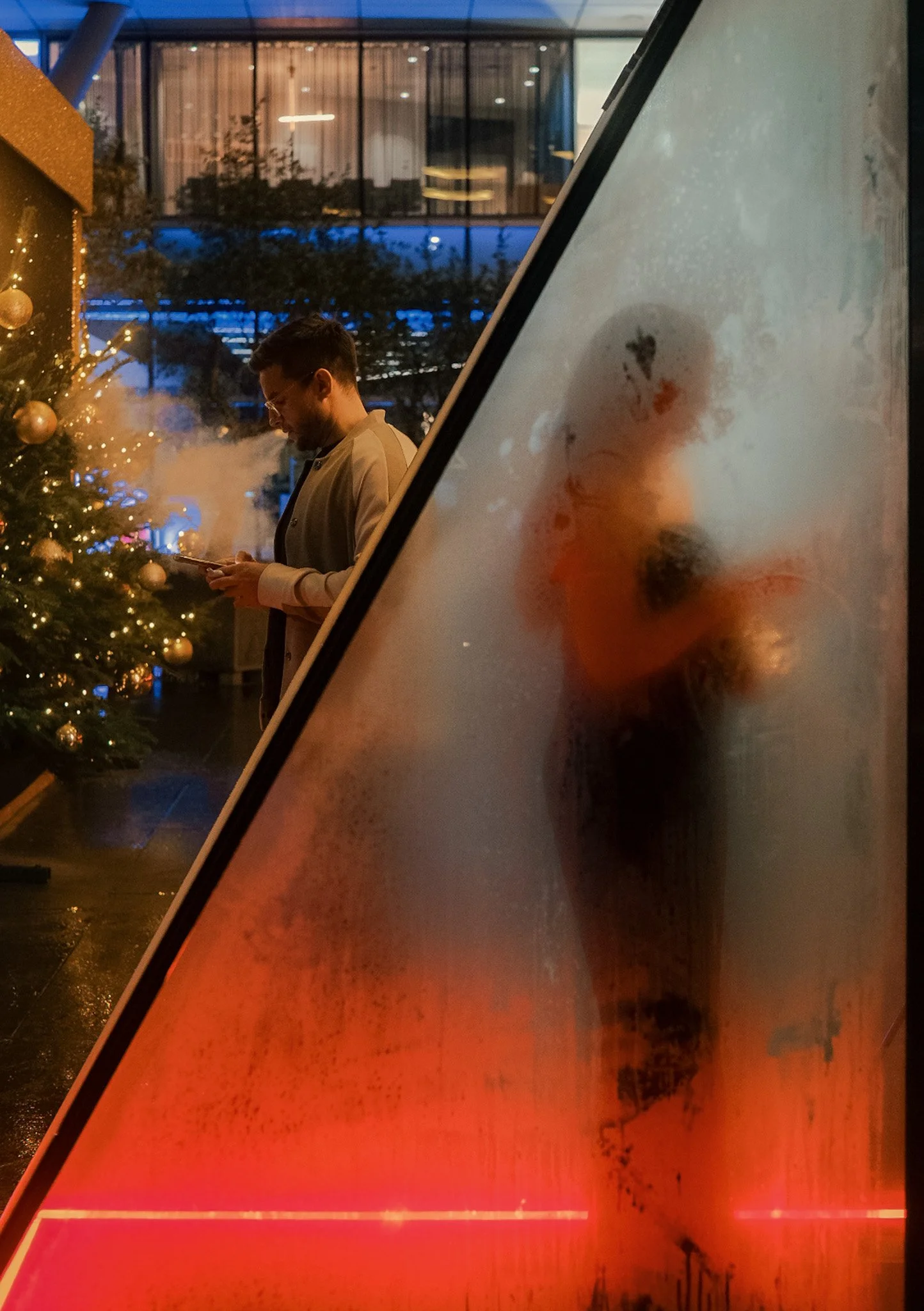
Chasing the Dark
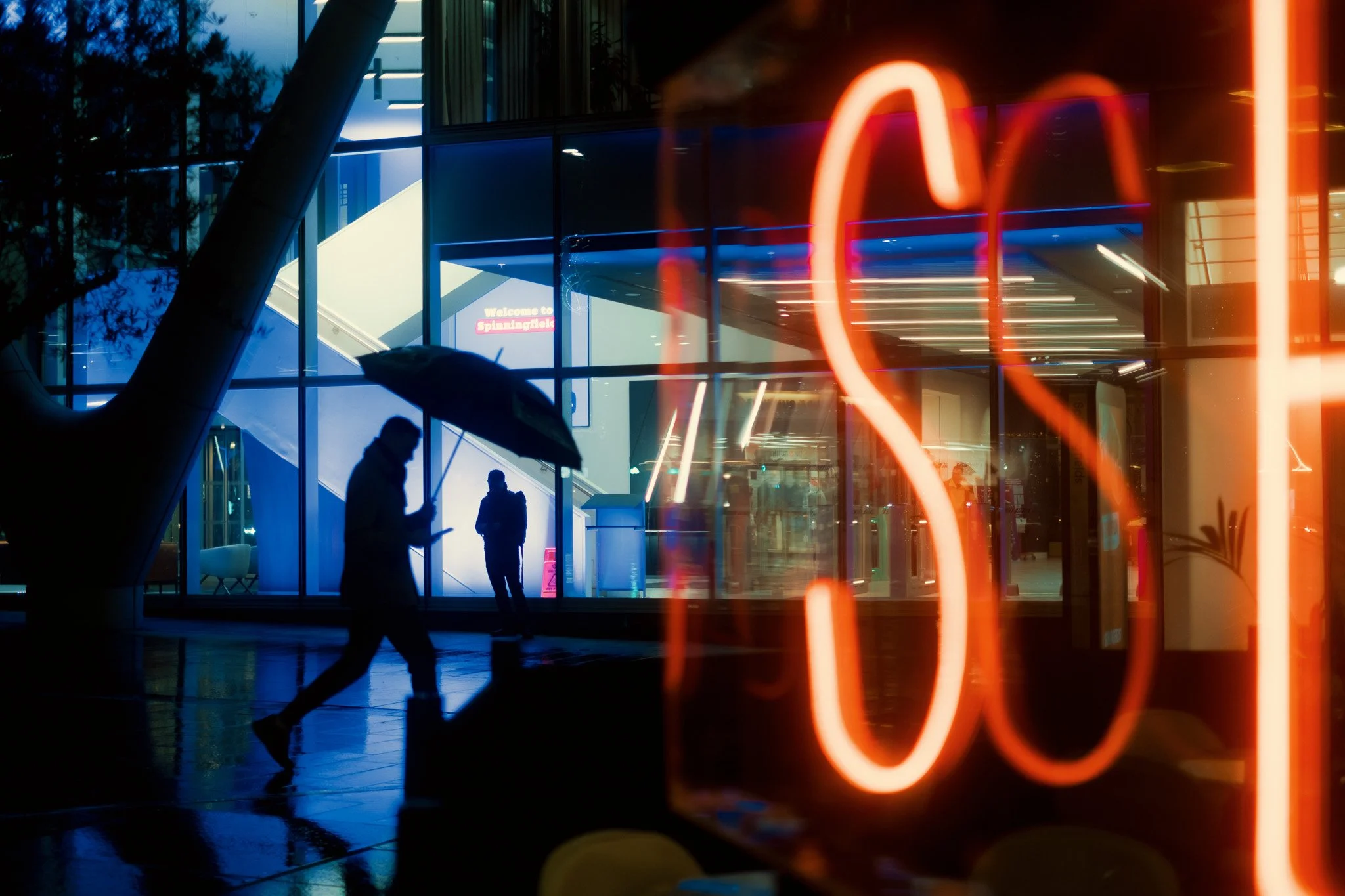
John’s framing up a shot outside one of Manchester’s sexy new restaurants (no more clues — this is my spot). I look down at my trainers, soaked through. Only the two pairs of socks I’m wearing are saving me — for now — from trench foot.
We’re out on another nighttime photowalk. With a twist: it’s fucking pouring.
I keep muttering that this wasn’t in the forecast. John stays quiet. I can’t shake the feeling he did some kind of rain dance before we met. I wouldn’t put it past him — something he picked up in some far-flung destination, I imagine.
John, a talented and motivated street photographer, loves shooting in this weather and is drawn to the rain like a moth to a flame (check out his blog). I am too — just maybe not all the time. Or right now. My umbrella’s blown inside out twice already. Staying dry is a fool’s errand; there’s no escape from the rising tide.
The City Doesn’t Sleep
I got hooked on night photography years ago. Just thinking about it conjures up images from films like Near Dark, Taxi Driver and Mean Streets. There’s something about seeing neon reflected in the water on the ground at night. If you’ve got a good eye and the will to tolerate the conditions, you can make some really cinematic images after dark.
In street photography in 2026, there are a lot of samey images knocking around: shots at golden hour, protests and, more recently, a trend for going to kite shows, dog shows and conventions so you don’t have to worry about coming home with an empty SD card. It’s all there for you. It’s tennis without a net.
Now, I’m not saying those other styles of shooting are less worthwhile because they’re easier or involve less adversity. But I do think you can really develop as a photographer by shooting in less-than-ideal conditions. More importantly, it forces you to shoot differently and makes your photos less predictable. For me, when I get a good photograph under those conditions, it’s far more satisfying.
I’ve come to realise that if I want to make something a little different, it helps to go out when other photographers would rather stay indoors than endure freezing temperatures, furious rain and the mystery of the night.
Learning to Shoot at Night
I’ve been shooting at night for the past six winters, and it’s produced some photos I’m proud of. Not just silhouettes and neon, but scenes you’d never encounter in the same way during the day. The learning curve can be steep, but any hobby you’re passionate about can demand the best of you and reward you for it.
I wasn’t a natural photographer, so everything I’ve learned has come the hard way, through a lot of practice. But I’ve also shot with some incredible photographers over the years and built up a lot of knowledge. I love taking someone out shooting and sharing what I’ve learned. There’s a real sense of fulfilment in watching someone go from struggling to taking bangers.
Why Don’t More People Shoot After Dark?
As much as I love night shooting, though, I’ve found that people tend to avoid it for some reason. The truth is, it can be difficult in several ways: technically, socially and psychologically.
Personally, I love the challenge. Shooting at night has made me a better photographer. It’s a great way to get to know your camera, improve your technical skills and sharpen your reflexes. Don’t get me wrong, I love shooting in the summer: T-shirts and shorts, great light, silhouettes for days. But I take a kind of perverse pleasure in what can only be described as self-flagellation: shooting on cold nights, preferably in the rain.
Suddenly, it’s as if all your tools as a photographer have been taken away.
All of a sudden, most of your aperture settings become useless. Usually, you’ll be shooting wide open or close to it. Say hello to shutter speeds that can drop to 1/30 or lower. Be ready to treat your ISO like a dangerous dog: turn your back on either and you’re getting tooth marks on your arse or an unusable photo! You have to be on the ball, as the conditions can push both you and your camera to your limits.
Night shooting isn’t for everyone, but for those who get into it, the rewards can be great. Some of my favourite photos have been taken at night.
Keeping Your Wits About You
If you’re new to night photography, I recommend shooting with a friend and starting slowly until you build up your confidence. Part of becoming a confident night shooter is learning to be aware of your surroundings, being considerate of the people you photograph and knowing when to move on from a scene or situation.
Depending on the time and place, you need to keep your wits about you. Camera or no camera, it’s good practice to look after yourself, be streetwise and stay aware of the world around you.
Workshops
I’m planning a few small-group workshops this winter. If you’re interested, head to the Workshop section of my website and leave your email address to be notified when dates and details are announced.
I don’t run many workshops, and I like to keep the groups small so I can give everyone individual attention. Too many photographers together can ruin a promising scene before it’s even begun, after all. Spaces will be limited, so register your interest if you’d like to come along.